There are two events coming up in the next week that should be of interest to followers of this blog.
July 23, 6 PM, The Forum, 2120 Speedway Ave. Monthly Wichita River Native Plant Society meeting.
Monarch Waystations for Texas
A discussion of events, organizations, businesses, products and services in and around Wichita Falls, TX which help people live a more sustainable lifestyle.
July 23, 6 PM, The Forum, 2120 Speedway Ave. Monthly Wichita River Native Plant Society meeting.
Monarch Waystations for Texas
![]() |
| Gina B, CC BY-SA 3.0 <https://creativecommons.org/licenses/by-sa/3.0>, via Wikimedia Commons |
I went to a conference a few years ago and attended one of those generational understanding workshops. The facilitator broke us up into generational groups, and our task was to identify something that influenced our world perception when we reached adulthood. Our group took less than a minute to identify ours. When it was our turn to share, the entire group shouted, "Sex, Drugs, Rock & Roll!" The looks on the faces of the younger cohorts was funny.
I graduated high school in the early 70's so I grew up during the 60's. The picture on this blog captures how many idealized the 60's, but truthfully, the hippies were a relatively small, but very influential, group. A lot of important things happened in the 60's and 70's. The Civil Rights Act (1964), the Clean Water Act (1972), the Clean Air Act (1963/1970), Occupational Safety and Health Act (1970), end of the Vietnam War (1963), and Earth Day (1970). These all came out of a movement for a safer, healthier, and more inclusive world. The time wasn't utopian by any stretch, but the movements spawned or nourished during this time certainly made our lives and our country better.
And now, here we are. Everyday, I find myself thinking, "WTF! What happened to us?" I hardly recognize my peer group some days, let alone the children many raised. I am not sure what happened, but we have turned to a dog-eat-dog philosophy. It seems we recognize our neighbors as people of value (mostly) as long as they are like us, but somehow, we have become a nation of, "I have mine! If you don't have enough, then it must be because you deserve it." I recall the seagulls from the movie Finding Nemo a lot of days. Earth Day is barely a mention on the calendar and environmental and safety regulations are being rolled back. Our public lands are being taken for commercial interests without regard to preserving them as a national treasure for all. American workers are being left behind. We have a lexicon of words relating to race and gender we aren't allowed to write and books our children are not allowed to read and discuss in many schools. Women are increasingly represented as having value only as wives and children by the government, and have lost autonomy over their own bodies in most places. Our neighbors of color are being harassed and brutalized (not to say whites are not as well, but our neighbors of color are being specifically targeted). We can argue about whether a given policy is appropriate without throwing our overall values is the dumpster.
I am truly sad and angry. I tend to hang with hippies still. We're older. We have the t-shirts. We're definitely not as spry as we used to be, but we still cling tightly to our values. We didn't come so far to go backwards. It's discouraging to feel like we are going to have to start all over again, but I am not giving up.
![]() |
| Eastern bluebird (male) USFWS Midwest Region from Midwest Region, United States, Public domain, via Wikimedia Commons |
If you haven't been to one before, or if you have, you should plan to attend the next one on Jan 30. The topic is bluebirds, and who doesn't love them? Bluebirds...not Blue Birds will be presented by Donna and Chris Honkomp, two members of the local Rolling Plains Chapter Texas Master Naturalist and also the Texas Bluebird Society. I have heard them talk about bluebirds before. They are very passionate and knowledgeable about the topic.
For the $20 admission ($25 if you are not a member of River Bend), light refreshments and beer/wine will be available. AND you'll learn a lot about bluebirds.
The Sip 'n Science events are always a lot of fun.
I have had the ad pop up several times showing a vacuum sealer for mason jars. The ad asserts food stored in mason jars will last longer, meaning you throw away less food.
I have such a vacuum sealer. Granted, it is one of the less expensive models. If I recall, it was about $30 a year ago. When I got it, I was having difficulty getting a good seal, so it has been sitting on the shelf. I decided to pull it out and try again.
I tested it on cherries and spinach. I had both for a week before vacuum sealing. The spinach was already showing some signs of spoiling, so I pulled out all of the bad leaves and rinsed/dried what remained. The cherries were fine in the crisper drawer. In the photo to the left you see the food 2 weeks later. By now, the spinach should be a pile of goo and the cherries moldy. Both are perfectly fine. I have opened the spinach a couple of times to pull out some leaves for mixing into my omelets and sandwiches, and then resealed (be careful breaking the seal or you may need to use a new lid).
My vacuum sealer does a great job on the wide-mouthed mason jars. I still have problems with the small-mouthed jars with getting a good seal. I just do it over until I get a seal, which usually takes 3 or 4 attempts. A different model might do better.
Overall, I see this as a good way to preserve fresh food longer. I was using mason jars to store rice, beans, lentils, and pasta already, but I wasn't vacuum sealing. I will be doing that next to see if it improves the storage life. I noticed this week my brown rice was clumping, so perhaps this will help keep the moisture out.
It wouldn't take long to recoup an investment in a sealer. Cherries are running almost $9/lb and spinach, almost $2/bunch. More if you are buying organic. Give it a try.
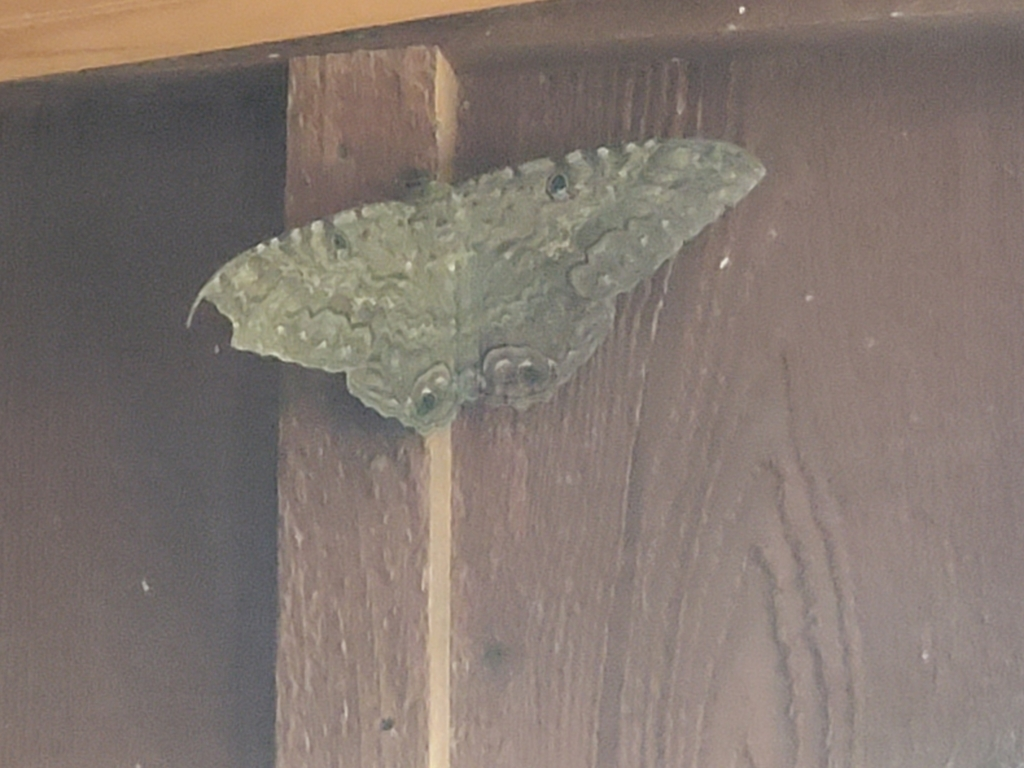
| Vine Sphinx moth |
I almost let the week go by without recognizing Moth Week. Moths don't get the press that butterflies do, probably because they aren't as active during the day and many of them are fairly nondescript. Obviously, that's not the case with the vine sphinx moth the to left. I did find this one during the day, so the colors are easy to see.
| Black Witch moth |
Moths are important pollinators. Moths prefer light-colored, fragrant, and long tubular flowers, especially those that open at night. Some examples are honeysuckle, morning glory, bee balm, milkweed, columbine, asters, clovers, phlox, thistles, yucca, and vetches. Some food plant pollinated by moths as well as bees include redcurrants, strawberries, and stone fruit.
Moths are a prime food source for bats.
Most people know that the monarch butterfly migrates, but many other butterflies and moths do as well. I mentioned the witch moth above migrates through here, but so do other moths. Not a lot is known about moth migration, but here is a short piece on the subject. Although the study was done on moths in Europe, the information is applicable here.
I hope you'll take some time to learn more about these fascinating insects.
| Kimball Museum (a "like to do") |
I hate to admit it. The past few months, I have been a sloth. At first, I was constantly stressing over the thinking I needed to be doing something because I was always busy before retiring. Not to say I didn't have things I could do--it was the absence of things I HAD to do. Then I went through a phase where I didn't feel like doing anything. Even things I liked to do. And then, finally, I got bored. I have finally started getting back to myself. I think I am over whatever was going on in my head.
Getting back to the true point of this post....I have always made most food from scratch. When the kids were small, it was mainly because (1) it was healthier for them, and (2) it's usually cheaper. And for most of my life, pinching pennies was the norm. But, I admit, working full-time and going to school at the same time sometimes made me really want to use the prepackaged stuff.
I have tried to find premade meals I like. Mostly because I am cooking for one most of the time. I have tried dozens of frozen and packaged things in recent months. For the most part, I haven't liked any of them, although a few are somewhat edible. If you are desperate. And then you look at the label--salt and sugar. Very little nutrition and a lot of calories.
I have been craving minestrone soup for days and finally decided to make it. Yes, I could have gone to the store and bought a can. After all, a can of Campbell's minestrone soup is only $1.79 at United Supermarkets (and even less expensive at some other stores). That $1.79 gets you 2.5, 1/2 cup servings. Does anyone actually eat a 1/2 cup of soup? If I go by the label, there is about 1.25 cups of soup in the can, which is still pretty stingy for a meal. Looking at the label, that 1/2 cup serving has 28% of the recommended daily amount of sodium. If I eat the whole can (which I would), I am nearly to 75% of my recommended sodium intake for the day. So we can say $1.79 for a meal, which is cheap.
I find most canned soups are edible, but not anything I truly want to eat. They usually have a metallic aftertaste and not much else. I admit I haven't tried the minestrone. But let's consider cost alone. I was lazy, so I did use a couple of ready made ingredients--one Swanson's chicken stock and a can of generic kidney beans. All of the other ingredients were things I had on hand--some tomatoes from the garden, veggies (corn, celery, onions, carrots, zucchini, potatoes, spinach and broccoli--unfortunately, I didn't have any cabbage), some barley, pasta, and spices (oregano, garlic, pepper, basil, rosemary, and parsley--no need to add any salt). So, the only things I paid any significant money for was the broth and the beans (both of which could be done cheaper with a bigger time investment.) And, of course you add water. Together, less than $5. Although a lot of veggies are listed, the amount of each one is small--anywhere from a tablespoon to 1/2 cup each. Since I had the tomatoes already, maybe $2 for all the veggies and that is an overestimate in my opinion.
It did take me about 30 minutes to cook the soup, but I have had six bowls of soup over the past few days. Any my bowls tend to be in the 2 cup range. The soup was thick and hearty. Although I estimate the pot of soup cost me $7, let's use $10. That would be $1/cup. The Campbell's soup was $1.43/cup. It also had less nutrition and more sodium.
Yes, it cost me about 45 min total to chop up veggies and cook the soup versus probably 5 min for Campbell's, but I also didn't have to cook several meals, so I think it probably evens out in the end.
We all need to make choices about our time, budget, and health. I encourage you to learn to cook from scratch and do it as you can. I think you'll find it worthwhile.
I have attended several of these programs, and they are always interesting.
If you're a member of River Bend (and you should be), the cost is $20. $25 for everyone else.
So far, the chapter has sponsored hikes in Wichita, Archer, Clay, Foard, and Wilbarger counties. Next month will be Hardeman County at Copper Breaks State Park on August 2. Copper Breaks is a pretty park that tends to be overlooked because of its location near Quanah.
The hike is free, although participants will need to pay the park entrance fee (13 and up $3; children under 13, free). The hike is scheduled for 4 hours, beginning at 8 AM. Generally, the hikes aren't difficult and the pace is slow, allowing everyone the opportunity to look at and learn more about the flora and fauna seen. Several Texas Master Naturalist members will be available to answer questions about what participants see. Depending upon the temperature, it is possible participants may see some Texas horned lizards during the hike.
Since it will be the height of the summer, hats, sunscreen, bug spray, and water are highly recommended.
The town is named after Quanah Parker, the last Comanche Chief, and those interested in history will find a couple of small local museums of interest after the hike.
Sign up through Eventbrite. There is no cost, but it helps to know how many plan to attend. Here's the ticketing link.
If you are interested in the upcoming hikes, more information is on the group Facebook Page as well as on Eventbrite.
![]() |
| NPS photo, Public domain, via Wikimedia Commons |
Last year I noticed a lot of homes in town had signs indicating they had a service treat their lawn for mosquitoes. I won't mention the name of the service, since I don't know what they use (their ad says "natural controls," but those words don't always mean what some of us might assume they mean).
I attended a webinar by the Xerces Society this past week, called "The Truth About Mosquito SPrays: Investigating Their Impact on Pollinators". I checked to see if it was on their YouTube channel yet so I could share it, but couldn't find it. So I will summarize some of the important parts.
It would stand to reason that a chemical that would kill mosquitoes might also kill other insects.
40% of invertebrates pollinators may be facing extinction, so anything that threatens them should be of concern. I wasn't aware that mosquitoes do drink nectar and are pollinators of some plants. It appears plants such as tansies and blunt-leafed orchids prefer mosquitoes.
Of course, for us, the big concern is the transmission of disease. Not all mosquitoes vector diseases. In fact, of the 176 species of mosquitoes in North America, only 2 species transmit diseases. And not all mosquito species drink blood.
We all know that when it rains, the mosquito population explodes. With the rain we having over the past couple of weeks, it is no surprise the mosquitoes are coming out. Mosquitoes only need a bottle cap full of water to propagate. They can survive with no water for up to 8 months and overwinter as eggs. Once the eggs hatch, the larva eat microorganisms in the water and transform into adults in 5 days. Their entire lifespan is just 8 - 10 days, with each female laying up to 500 eggs. You can see how the population can explode quickly.
Mosquitoes are most often controlled by pyrethroids. These pesticides are highly persistent in the environment and can persist for weeks or months. They are toxic to other insects, including bees. Generally, chemicals called synergists are added to the pyrethroids to increase their toxicity. To control adult mosquitoes, these chemicals can be administered as a home barrier spray of by fogging.
Risks to insects other than mosquitoes have been documented. Monarch caterpillars fed leaves treated by barrier sprays have much lower survival rates and both monarch and bee die-offs are documented after fogging.
This webinar reported on the results of a study conducted by the Xerces Society over the summer of 2023. The studied the difference in the numbers and quantities of pesticides in yards that were sprayed with mosquito barrier sprays, yards of neighbors to those yards, and yards subjected to fogging.
Results:
There could be harmful effects beyond death for pollinators. What are the potential long-term impacts on individuals and populations?
The conclusion is that spraying your yard for mosquitoes has a high risk to other pollinators. For those of us with pollinator gardens, this leads to a couple of conclusions. First, we shouldn't be spraying pesticides in our yard. If we have a neighbor who has a mosquito spray service, drift can be an issue. You might put nonflowering plants as a barrier to drift and plant your pollinator plants on the opposite side of the yard.
If you don't use pesticides, how can you protect yourself from mosquitoes?
Yes, mosquitoes are a nuisance, but we need to be careful not to cut off our nose to spite our face.
![]() |
| Cooking up homemade chicken soup from leftovers |
I do know some people who rarely, if ever, eat leftovers, and that's a shame. It reduces waste--both of food and of money. With the cost of groceries, getting more meals out of the food you buy just makes sense. From a sustainability point of view, less food waste is a great thing.
Some of the issue is--who wants to eat the same thing over and over? I don't. That's why learning to repurpose leftovers can make it seem like you're not really eating leftovers. Instead, you have an all-new meal.
Here's an example. We usually have ham for Christmas dinner. This year, we celebrated Christmas a little early because some members of my family were going on a trip over the holiday. After the meal, I took home way too much ham, potato casserole (basically mashed potatoes with mashed carrots and cheese mixed in), and some veggies. The potato casserole turned into potato pancakes for breakfast and some was added to soups for more flavor. The potatoes could have been turned into a delicious potato soup all on their own, but I love potato pancakes for breakfast. More of the ham went into a breakfast casserole that my husband and I had for dinner a couple of days later. More ham went into an omelet one morning for my breakfast, and more went into a dinner of pinto beans with fried potatoes and corn bread (my husband's favorite dinner), and on New Year's Day, black-eyed peas. Believe it or not, I still have a few slices of ham to do something with this weekend--fortunately, ham lasts a long time. You pretty much have to forget about it for weeks before it goes bad.
I keep leftover chicken and turkey in the freezer for soup and casseroles. You can see in the picture above, I raided the chicken to make chicken soup. (The picture isn't the best as I was using my cell phone and the soup was boiling--steam doesn't help create a clear picture). I always have onions, carrots, celery, and fresh spinach around for soup making. In addition to the leftover chicken, I had some leftover corn from dinner earlier in the week and had some fresh herbs in the crisper that I needed to get used up. I also had a jar of potato water. I was planning to make potato bread, but got side-tracked, so put it in the soup for more nutrition and extra flavor. Then I threw in some orzo.
I know a lot of people feel making your own soup is time consuming. But it really isn't, especially if you are using up leftovers, as a lot of things are already chopped up or cooked. It's just a matter of throwing it all in a pot and watching magic happen. As an added bonus, less sodium and more nutrients.
As a way to help the environment (and your budget) in 2025, consider finding ways to creatively use up your leftovers. If you have a favorite leftover recipe, please share in a comment.
Retirement has been a bigger adjustment that I thought. It's amazing when you have less to do, you get disorganized.
I think I am fairly well sorted out now and can get back to writing this blog and my other.
I came home today to see that our neighbor had blown all the leaves in his yard into ours. Why, thank you, neighbor!
He doesn't like leaves. He doesn't like mess. In fact, last year he tore out all his shrubbery and a month ago, he took down his two mature trees--an elm and a live oak--because they were messy.
Therefore, I know his actions were his passive/aggressive way to send me a message that he wants me to rake my leaves. You would think after living next to us for 12 years he would know the likelihood of that happening is about zero.
I do need to get out and pick up the leaves in the street in order to get them on the garden before the city street sweeper comes by to take them all away. I am not sure when that is going to happen since this weekend is busy, busy.
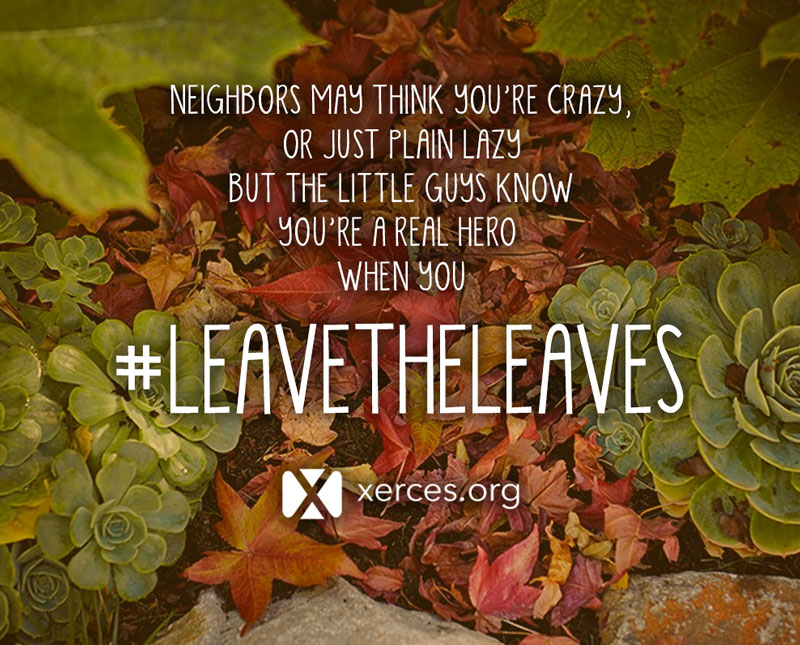
Personally, I don't rake at all, so we have a layer of leaves (read, "mulch") on our yard. I do sweep the leaves off the drive, sidewalks, and curbs to put on the garden to compost over the winter and to protect some of the herbs I overwinter (oregano and sage for examples). In the past, I have taken bags of leaves from our neighbors, but am a little more reticent now since most of our neighbors have taken to having a lawn treatment company spray their yards. Their yards have fewer weeds, but ours is greener (except in August, maybe).
Why leave the leaves? First, because it is good mulch. They provide good protection for plant roots and plants you want to keep alive over the winter. Secondly, by spring the leaves will have broken down quite a bit, fertilizing the soil. And lastly, they provide shelter for insects and their eggs/larvae/pupae. You can't have butterflies and moths if you through them away with your leaves.
If you truly can't stand to have leaves all over the yard, at least move them into places where they can do the most good. Flowerbeds to fertilize/protect bulbs and a back corner of your yard the neighbors can't see and complain about.
If you are looking for ways to improve your yard for pollinators and other wildlife, download this handout from the Xerces Society.
![]() |
| A previous year's haul |
The clean up is scheduled for Saturday, September 7, starting at 9 AM. We are usually done no later than 11:00.
Hope to see you there!
I'm not a shopper for the most part. The big exception is book stores. I buy a lot of books.
I had some spare time between appointments a few weeks ago and stopped into a local bookstore to browse. I always check out the sale area--I never know when I might find a deal. I came across We Are the ARK by Mary Reynolds. I wouldn't have paid the $28.98 on the sticker (let alone the $38 listed on the book cover itself), but I think it was on sale for $4.99. I'll go that far on a whim. You can get the Kindle version for $14.99.
Overall, it's a good book. ARK stands for Acts of Regenerative Kindness. The author advocates that all of us return 50% of our yards to nature and use the other portion to grow some of our own food. This is a very similar call to arms made by Douglas Tallamy and E.O. Wilson. Ms. Reynold's book is less science than ethics/philosophy, unlike reading Tallamy and Wilson. Therefore, the book would be a good introduction for those who may feel a little intimidated by a more science-based approach. Not that there isn't some ecology principles discussed in the book, because there are. She highlights three laws:
We (the Texas Master Naturalist chapter and a couple of other interested people) got that mess cleaned up on Rathgeber Rd, and the city did us a solid and picked up the bagged trash. We cleaned up about 35 - 40 lawn bags of trash in that short stretch. I need to go by to take a picture for a before and after.
This weekend is the semiannual compost giveaway by the city. Here are the details from their news release:
" Residents who participate in the Choose to Reuse Program can pick up a free load of compost at the Wichita Falls Organics Facility. The City of Wichita Falls offers a variety of alternatives to diverting reusable waste from the city’s landfill, including organic collections. The organics collections are offered to both residential and commercial customers and can accept yard waste (grass, leaves, and branches), paper (newspaper, office papers, shredded paper, magazines, phone books, tissue paper, and paper bags), cardboard, chipboard, wood, and food waste. Organics recycling saves money, is environmentally friendly, and creates nutrient-rich compost that can be used to enhance soil for lawns and gardens. The compost giveaway will take place Saturday, March 2, 2024, from 9:00 am to 3:00 pm at the Wichita Falls Landfill on Wiley Road. The compost will be loaded by city employees for residents. There is a limit of one pickup truck or 4x8 trailer load per person. To pick up the compost, residents must provide a City of Wichita Falls water bill showing the $3.00 recycling program charge. By State Law, all loads must be covered to ensure no blowing debris on roadways. City employees are required to see the participants cover material before loading the compost. No dump trucks, commercial vehicles, or oversized trailers will be loaded. Commercial operation compost purchases can contact the Wichita Falls Landfill at 940-631-8274. Landfill Address: 10984 Wiley Road Wichita Falls, Texas 76307 Directions to the landfill: • Take Seymour Highway Southwest toward Seymour on Highway 258. • At the Kamay “Y,” proceed West on Highway 258 toward Kamay. • Travel approximately one mile to Wiley Road and turn right (North). • Remain on Wiley Road for two miles. The entrance to the landfill is located on the left. For questions or more information, please contact the Sanitation Department at 761-7977. "
In addition, the annual plant swap, organized by the Wichita Falls Backyard Gardeners is coming up on April 6, 10 AM - noon. It will be at the Park Place Christian Church. Bring cuttings, seedlings, plants you have too many off, or other gardening items to swap. All of the guidelines are on the group's Facebook page. If you need a table, you need to let them know in advance.
If anyone would like to lend a hand, email green.wichitafalls@gmail.com (put TRASH in the subject, so I don't delete) in the next day or two. I plan to tackle this project.
I use the plastic bag recycling container at United Marketstreet and wondered if bags placed in there were really recycled. So I called on my friend, Google, and apparently, yes, they can be. We don't have a city plastic recycling that takes plastic bags, so you need to use the grocery store bins specifically for these bags.
Less than 10% of the plastic bags in the US are recycled. Some plastic bags and other plastic film are recycled into composite lumber. Most is shipped to other countries, although much of that is burned for not-so-clean fuel. A small amount is recycled into other plastic products.
However, the best thing we can do is to try to avoid getting the bags to start with, although my own experience is that it is hard to avoid them altogether. Producing 1,500 plastic bags consumes 33 lbs. of fossil fuels and 55 gallons of fresh water, and produces 15 lbs. of solid waste and 0.04 tons of CO2.
Keep your reusable fabric bags in your car and remember to use them. If you are buying just one or two items, refuse a bag and carry your purchases out in your hands. Reuse the bags you do get at least one more time, and remember to take bags back to the grocery and place them in the recycling bin by the front door.
I truly wish the city would ban plastic shopping bags as some other cities do, but I don't see that happening anytime soon. Much of the litter I pick up on walks is discarded shopping bags. As much as I don't see an outright ban happening here in Wichita Falls, it won't hurt to bring it up now and again with your City Council representatives. I am not aware of anyone currently on the City Council who would be a champion of such as issue, but one never knows.
![]() |
| Photo by Kelly Neil on Unsplash |
I'm an omnivore. I recognize that eating lower on the food pyramid is generally better for modern humans and for the environment. But I also recognize that there are tens of thousands of years of evolution in which people ate all kinds of food, and morally, I don't have a problem with eating meat. That being said, I prefer eating meat from animals that have been treated humanely before they end up on my plate.
This brings me to eggs. What do all of the various labels mean and what difference does it make?
If you see the term "natural" on the label, it means nothing. All eggs are natural. Eggs are not processed to be ready for you to eat.
If eggs do not have "cage-free", "free-range", or "pasture-raised" on the carton, you can rest assured, the eggs come from a battery cage system. The vast majority of the eggs sold in the US come from battery caged hens. They are the least expensive eggs, but birds held in these cages have a horrible life. They have about 67 square inches of space (think an 8 x 11 piece of paper of floor space). There is no ability to do things that chickens do. The chickens are very limited in their ability to move and suffer high stress and also more commonly develop osteoporosis.
The next level up is cage-free eggs. Hens in this environment have more space and can move around, flap their wings and engage in normal chicken behavior. They still don't have a lot of space and they are not outside.
Free-range eggs are from hens that do have access to being outdoors, although they don't have to have a lot of outdoor space.
Pasture-raised eggs hens have the best commercial environment with more access to the outdoors. Since they can forage, they can eat bugs and other green plants they would not have access to indoors.
What about organic eggs? This just means their feed is organic (no chemical pesticides).
What about vegetarian eggs? I am not a fan. This means the chickens are fed only plant food. Chickens are also omnivores and love insects and grubs.
We can easily see how the method of egg production can affect a hen's quality of life, but does it make a difference in the nutritional value of the egg? Well, yes it does. Personally, I think there is a big difference in the taste of a caged egg versus a pasture-raised egg, but taste is one of those things that you can argue is subjective. Nutrition, not so much.
Studies have shown that "the average free-range egg in comparison to caged eggs show a quarter to a third less cholesterol, a quarter less saturated fat, two-thirds more vitamin A, three times more vitamin E, seven times more beta-carotene and twice the amount of omega-3 fatty acids (Gaia). Other tests performed have found that free-range eggs have nearly six times the amount of vitamin D and significantly more B vitamins in comparison to store brand eggs." Source
Given options, I prefer buying eggs from local small farms or homes that allow their chickens outside to be chickens. If I am buying them in the store, then I go with pasture-raised eggs if they have them. Cage-free is the minimum I will go.
Pasture-raised eggs are expensive. One place you can find them a little cheaper is at Natural Grocers. If you are a member of their Npower rewards, you can buy them even more cheaply. Always check the sale area of in cooler case where the dairy products are. It doesn't happen often, but sometimes you can find some eggs beyond their sale date for super cheap. They are still perfectly good to use.
Our everyday purchase choices matter. I know some people just don't have the income to be picky, but most of us can help raise the bar a little bit on eggs.
![]() |
| Photo by Alexander Mils on Unsplash |
Did you know the average American family throws away 1/3 of all the food they buy? That could be the take out box from the restaurant you ate at last week or, more likely, the food that looked so yummy at the store that you didn't get around using before it spoiled or it went well past the "Use By" date. By the way, did you know you can safely use food past the "Use By" date? Some times, well past. I do it all the time. Yes, if you pull a can from the back of your pantry with a Use By date of 2016 (which I did this week), you might be pushing it. I opened the can and the contents smelled OK, but looked disgusting, so I decided not to push my luck.
Besides being a waste of money, the food we toss took fossil fuel to transport and probably has added pesticides, which also contain fossil fuels. Wasting less food is not only good for our budgets, but for the environment.
I'm generally frugal, but I do waste more food than I should, so that is my focus for 2024--throw away no food. We probably won't hit the "no food," but I think "very little food" is doable.
This isn't intended to be a food blog, but I will probably talk about food a lot in 2024, because this is truly an excellent place to start in our quest to live more sustainable lives.
Once again today I made soup from leftovers for lunch. A few days ago I made mashed potato casserole (mashed potatoes and carrots with cheese added--kids and husbands will eat carrots this way and the carrots five the casserole a nice color). I was at the Farmer's Market and was thinking about lunch and remembered I still had some of that casserole in the frig, It was at the end of its edible life expectancy. Rather than throw it out, why not creamy potato soup? I sauteed some onions and celery, added the leftover casserole with some garlic and pepper and a little broth to heat it up, then a bit of cream at the end and voila! Soup! Not only did I have lunch today, but probably the next couple of days, unless I decide to freeze it. Altogether, I probably spent about $1 and easily have 3, maybe 4, meals.
What are some ways to spend less at the grocery or Farmer's Market?